Imagine you’re a radiologist trying to train an AI model to spot rare diseases. One of the biggest hurdles? Finding enough data! In medical imaging, datasets can be limited, and abnormalities—like rare tumors—are hard to come by. This is where generative AI steps in and starts making waves. Generative AI, especially models like GANs (Generative Adversarial Networks), are now creating synthetic medical images—and not just any images, but those that look strikingly real. These images are proving to be game-changers for training AI systems in radiology.
Why Do We Need Synthetic Medical Images?
If you’ve ever worked with real medical datasets, you know they come with a lot of baggage—privacy concerns, cost, and, frankly, an imbalance of data. For example, common conditions like normal chest X-rays are abundant, but what about those rare cases of early-stage lung cancer? That’s where things get tricky.
By using synthetic images, we can generate those rare cases, balancing out the dataset so AI models can better detect both common and rare findings. And the best part? These images don’t raise any privacy concerns because they don’t come from real patients—they’re generated from scratch!
So, How Does Generative AI Create These Images?
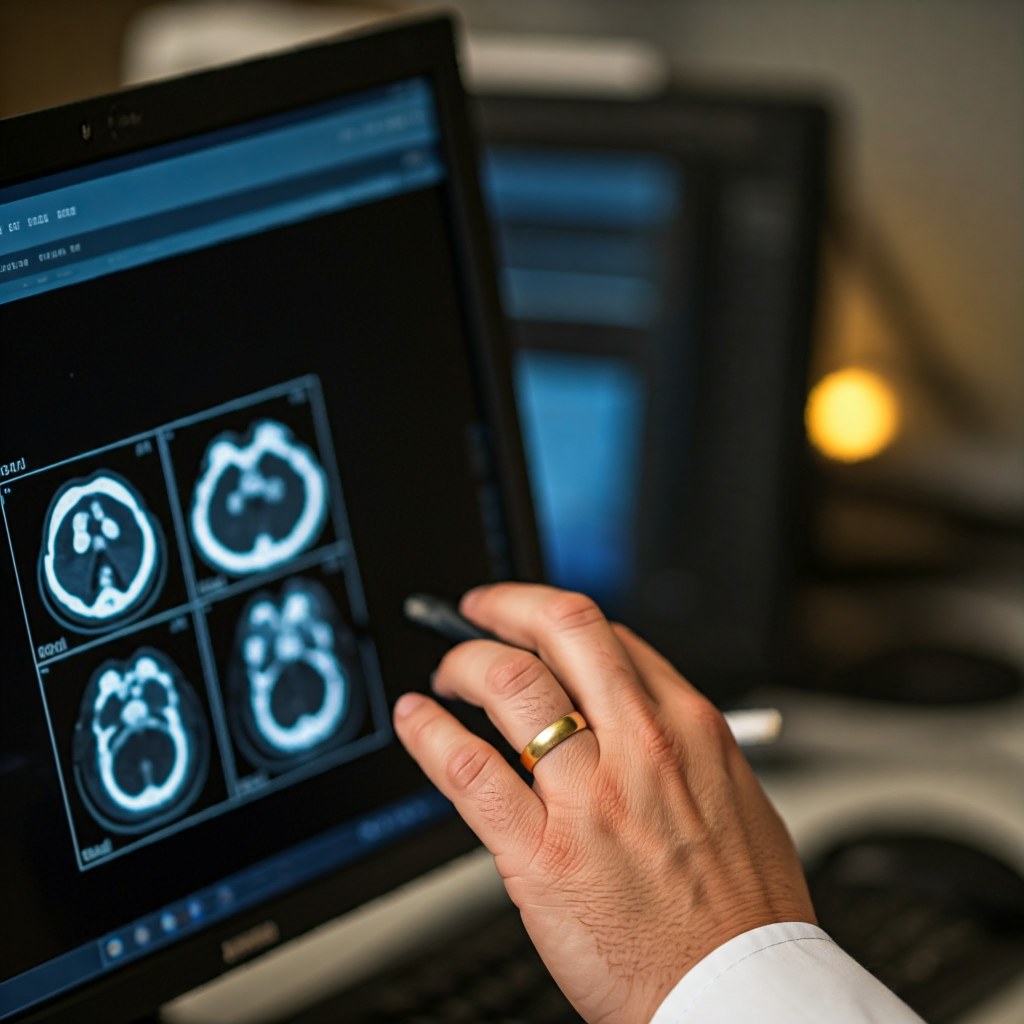
Generative AI models like GANs learn to mimic the real world by being trained on real data first. Once they’ve learned the patterns, they can start creating their own versions of these images. For instance, researchers from NVIDIA and Mayo Clinic have used GANs to generate brain MRIs with synthetic tumors. What’s even cooler is that these tumors can be adjusted in size, shape, and location, allowing researchers to explore countless variations.
And it doesn’t stop there! Synthetic images aren’t limited to one condition—they can simulate many findings, creating a broader and more useful dataset.
Why Should Radiologists Care About Synthetic Data?
Here’s where things get exciting for radiologists. Data diversity is key to training accurate AI models, and generative AI helps us fill the gaps. This means:
- Better Detection of Rare Conditions: Since rare diseases are underrepresented in real datasets, synthetic images help models learn to identify them more effectively.
- Privacy Protection: Because synthetic data doesn’t involve real patients, it avoids all those tricky privacy concerns.
- Improved Efficiency: Instead of spending months collecting new data, you can generate thousands of diverse cases in days!
Real-World Applications
Generative AI has already proven its worth in multiple imaging modalities:
- MRI & CT Scans: AI models are being trained to detect abnormalities like tumors with synthetic data.
- X-rays: Models trained on synthetic X-rays are better at spotting things like lung diseases and fractures, leading to faster and more accurate diagnoses.
What’s Next for Synthetic Medical Imaging?
While the potential is huge, there are still challenges to overcome. The most pressing issue is ensuring that synthetic images are indistinguishable from real ones—both to AI models and to human radiologists. But with rapid advancements in AI technology, we’re heading in the right direction.
Generative AI isn’t just about creating fake images. It’s about expanding the possibilities of medical research, training more accurate AI models, and ultimately helping radiologists make better, faster decisions for the patients.

 Radiology AI
Leave a comment