Radiology chains, much like airlines, are juggling a complex dance of high capex equipment, specialized personnel, and thin profit margins. But what if we could borrow some of the aviation industry’s playbook to solve the challenges plaguing radiology today?
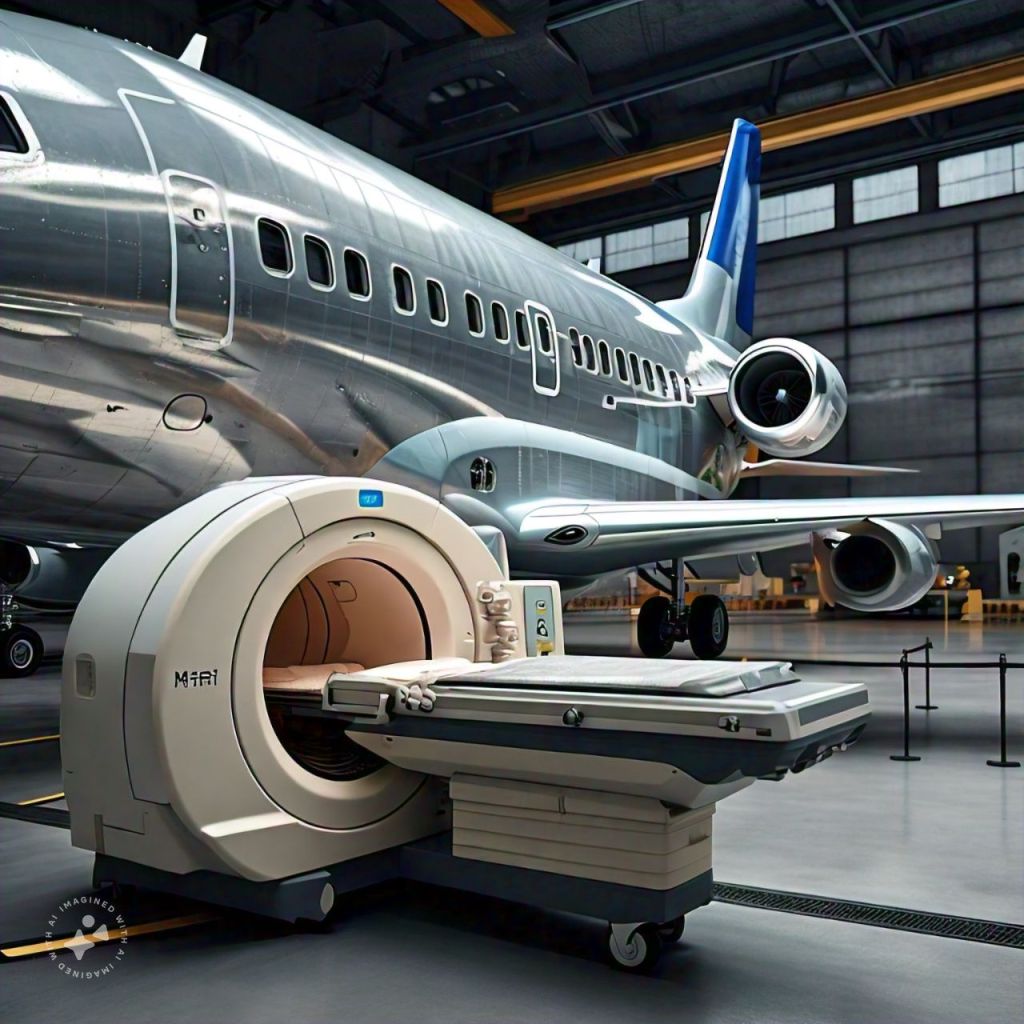
- Crazy initial cap-ex – Both radiology chains and airlines need expensive, specialized assets like MRI / CT Scanners and airplanes
- Highly paid employees – Radiologists and Pilots are both specialized fields, take time in training and command high salaries – in the 3-6 lac per month range
- Need for specialized support staff – Radiographers and Cabin Crew are both required in large numbers and command similar salaries – in the 30K to 80K per month range
- Errors not possible – There is a low tolerance for error in both industries which have lives depending on them
- More suppliers needed – Boeing and Airbus virtually control the entire commercial jet market while in India – GE, Siemens, Philips and United virtually control the entire MRI / CT Scanner market
- Key to profits – Both industries depend heavily on utilization rates of their expensive assets to turn a profit
- Maintenance a pain – CMCs and Helium costs for MRIs and MRO work for airplanes cost a bomb, take time and make low utilization firms unviable even if the asset is owned and debt free
- Rise of the LCC – Low Cost airlines have dominated sky’s this century and there has been an emergence of low cost model in radiology as well with the likes of Aarthi Scans, bodyScans, House of Diagnostics pioneering the low cost model in India
There are key differences of course – from airplanes being mobile vs MRI being very difficult to move, better insurance and financing products for airlines, a lease and buy back arrangement for airplanes, larger size of organizations and competitors which can spread fixed costs, much lower gross margins in airlines than radiology and more government control there
What solutions in radiology can be imported from aviation?
- Owning assets – rationalizing of GST on medical equipment leasing can result in similar sale and lease-back model can improve healthcare financing, making expansion bring in additional cash like with airlines
- Training – Indigo spends 3 months training and standardizing every aspect for its cabin crew before they are ready to serve. With the poor quality of education in India, investing in radiographer and support staff training by radiology chains or consortiums of them – is the only solution to improve the service delivery
- Autopilot – Airlines have been able to reduce both – the numbers required and complexity of training – for pilots since the popularization of autopilot. AI brings the opportunity for radiology to have a similar moment bringing in more automation, consistency and eventually lowering of costs
- Kickbacks and Commissions – Airlines operated through GSAs from 1960s to 2000s which took commission to sell tickets. With the advent of internet, in just 2 decades things have moved online greatly reducing commissions paid. Direct discovery and creating strong brands can reduce the 30-60% referral commission that radiology chains pay to referring physicians on each patient referred – thus increasing profitability
The surprising parallels between radiology and aviation offer a unique opportunity to revolutionize the healthcare industry. By adopting strategies from airlines, such as asset ownership models, standardized training, AI-driven automation, and direct patient engagement, radiology chains can improve efficiency, reduce costs, and enhance patient care.
 Radiology AI
Leave a comment